
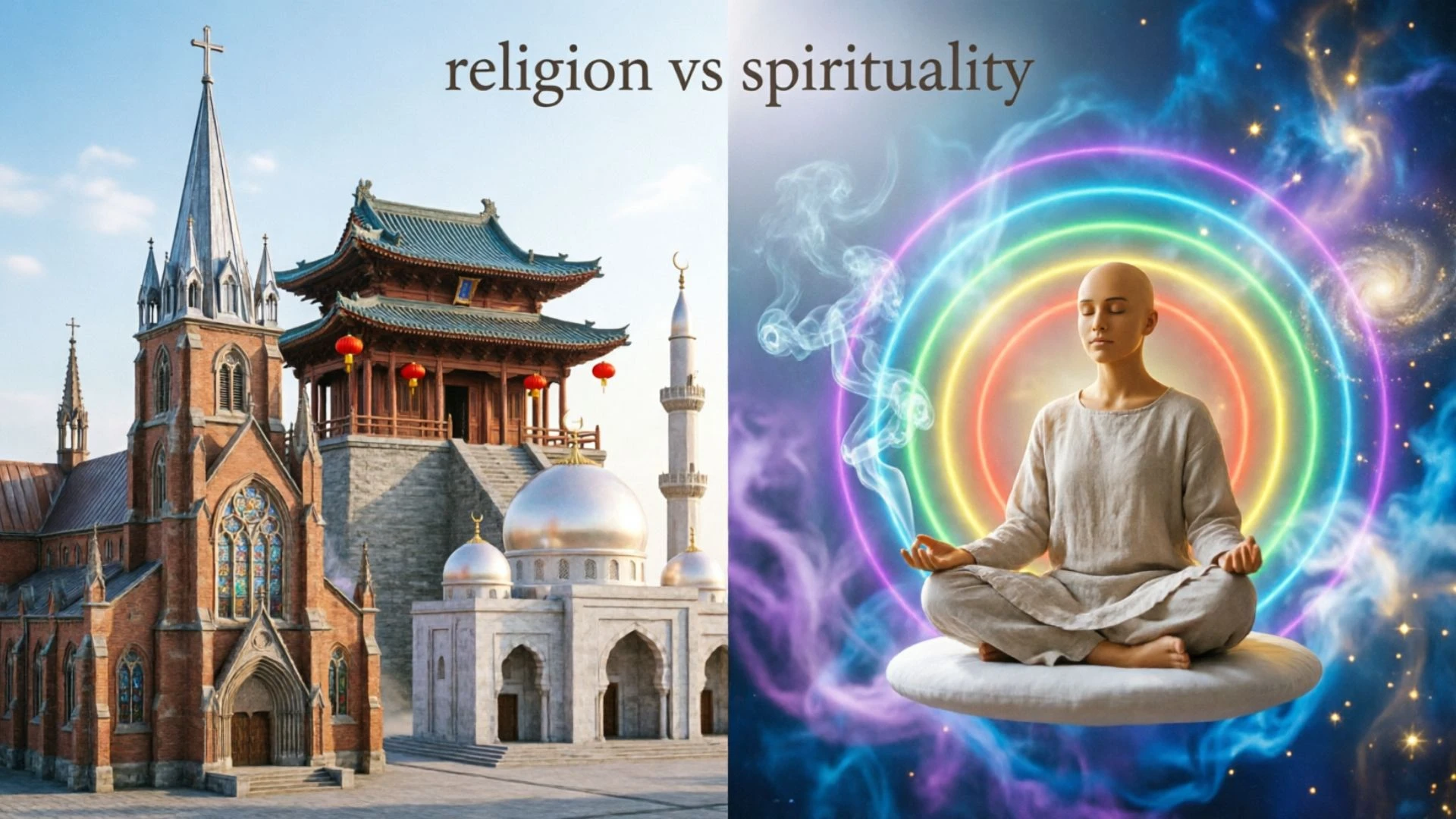
Two Paths, One Eternal Question
You have probably heard someone say, “I am spiritual but not religious.” Maybe you have said it yourself. That single phrase captures one of the most profound shifts happening in modern culture today. Millions of people are stepping away from organized religion while still seeking something deeper, something that feels real, personal, and alive.
But what does it actually mean? Is religion outdated? Is spirituality just religion with looser rules? The truth is far more nuanced. Religion and spirituality are two distinct but deeply connected approaches to life’s biggest questions. Both ask: Who are we? Why are we here? What happens after we die?
The answers they offer are different. The paths they carve are different. Yet both tap into the same fundamental human hunger for meaning, connection, and transcendence. This post digs into the heart of this debate with depth, honesty, and respect for both traditions.
Whether you follow a faith tradition, walk a spiritual path, or are simply curious, this exploration is for you.
Key Takeaways
- Religion is an organized system of beliefs, rituals, and moral codes shared by a community, while spirituality is a personal, individual journey toward inner truth and connection.
- You can be religious without being spiritual, spiritual without being religious, or deeply committed to both at the same time.
- Spirituality often focuses on personal experience and inner transformation, while religion provides structure, community, and doctrinal guidance.
- Both religion and spirituality address the core human need for purpose, belonging, and transcendence, just through different frameworks.
- The growing “spiritual but not religious” movement reflects a global shift in how people relate to faith, identity, and the sacred.
What Are Religion and Spirituality, Really?
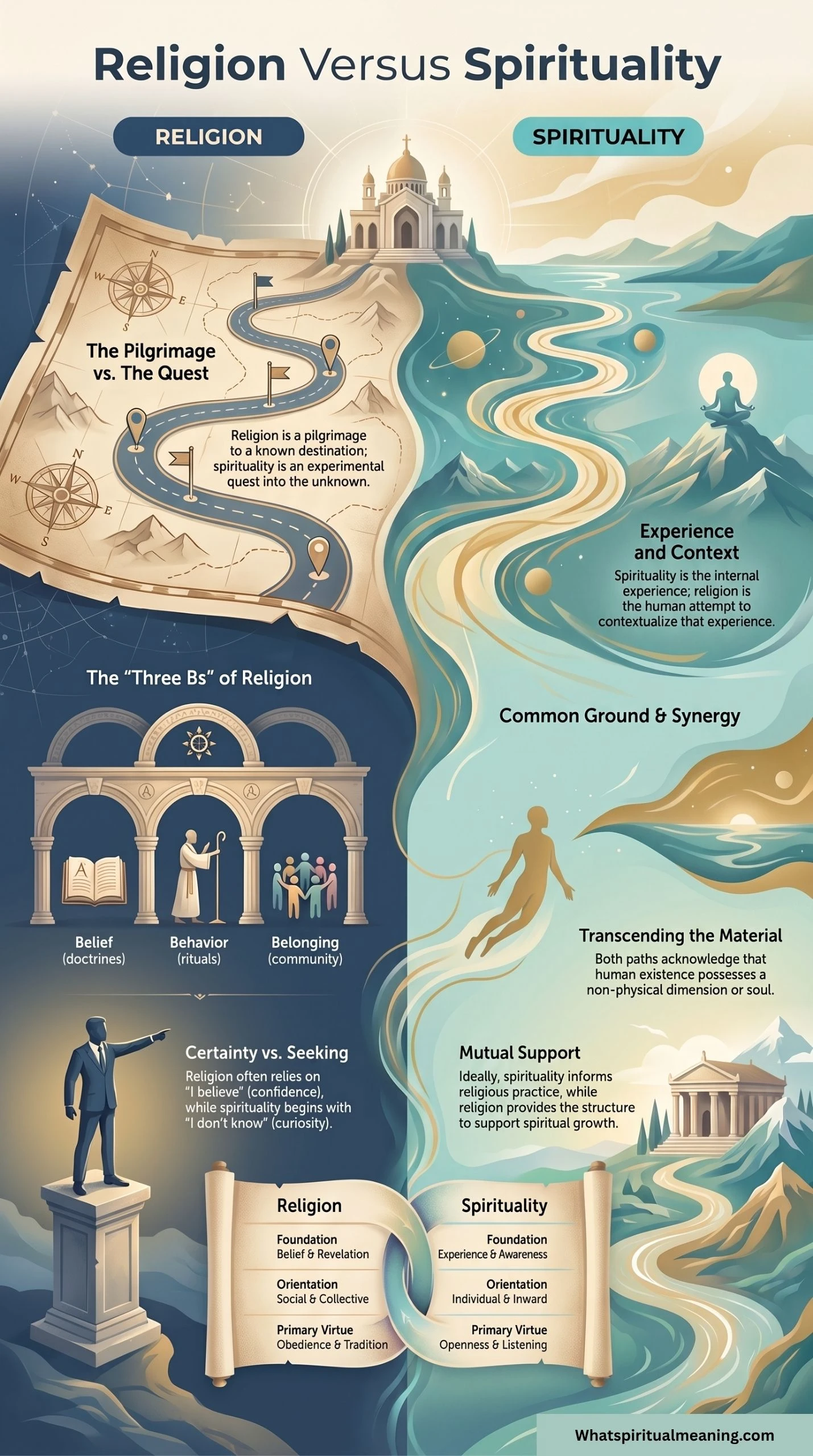
Before you can compare religion vs spirituality, you need solid definitions. These two words carry enormous emotional weight. People defend them fiercely. People also misuse them constantly.
Religion, at its core, is an organized system. It includes a set of beliefs about the divine, a moral code, sacred texts, rituals, and a community of followers. Christianity, Islam, Hinduism, Buddhism, Judaism, and Sikhism are all religions. Each has doctrines that members are expected to follow. Each has leaders, places of worship, and shared practices that bind the community together.
Spirituality, by contrast, is deeply personal. It does not require a church, a scripture, or a priest. It is the individual’s direct experience of something greater than themselves. This could be God, the universe, consciousness, love, or simply a profound sense of inner peace. Spirituality resists rigid definition because it lives in the space between words.
Sociologist Robert Bellah described religion as a “system of symbols” that creates powerful moods and motivations in people. Psychologist William James defined spirituality as the direct personal experience of the divine, unmediated by institutions. Both definitions hold truth. Together, they reveal why the two concepts overlap but never completely merge.
The Historical Relationship Between Religion and Spirituality
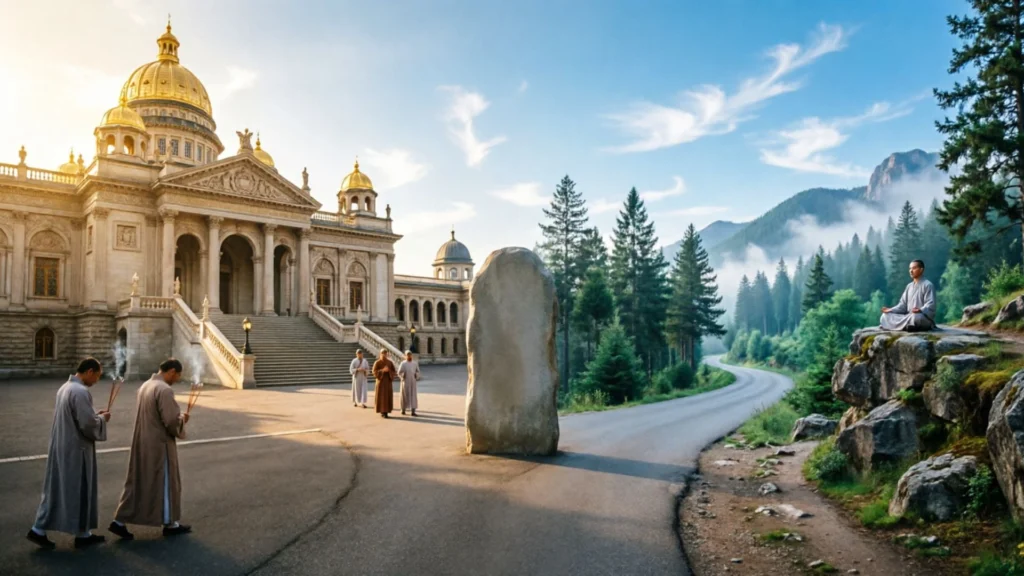
For most of human history, religion and spirituality were inseparable. Ancient peoples did not distinguish between the two. Spiritual experience happened inside the temple, the mosque, the synagogue, or the sacred grove. Mystical encounters with the divine were interpreted through the lens of whatever religious tradition the person belonged to.
Christian mystics like Meister Eckhart and Teresa of Avila had profoundly personal spiritual experiences but expressed them within the framework of their faith. Sufi masters in Islam sought direct union with Allah, yet remained deeply rooted in Islamic practice. Hindu sages explored consciousness through yoga and meditation within the Vedic tradition. Spiritual experience and religious framework were partners, not rivals.
The split began in the Enlightenment era of the 17th and 18th centuries. As reason and science challenged the authority of the Church, individuals began to question institutional religion. The idea that you could have a personal relationship with God or the cosmos without a religious intermediary started gaining ground. Romanticism in the 19th century deepened this shift, glorifying personal feeling and natural mysticism over cold doctrine.
By the 20th century, the two had diverged enough that sociologists began studying them as separate phenomena. The 1960s counterculture movement in the West accelerated this further. Young people rejected institutional authority in all forms, including organized religion. They turned to Eastern philosophies, meditation, psychedelics, and personal exploration. “Spiritual but not religious” became a lived reality for millions before it became a demographic category.
7 Core Differences Between Religion and Spirituality
1. Structure vs. Personal Freedom
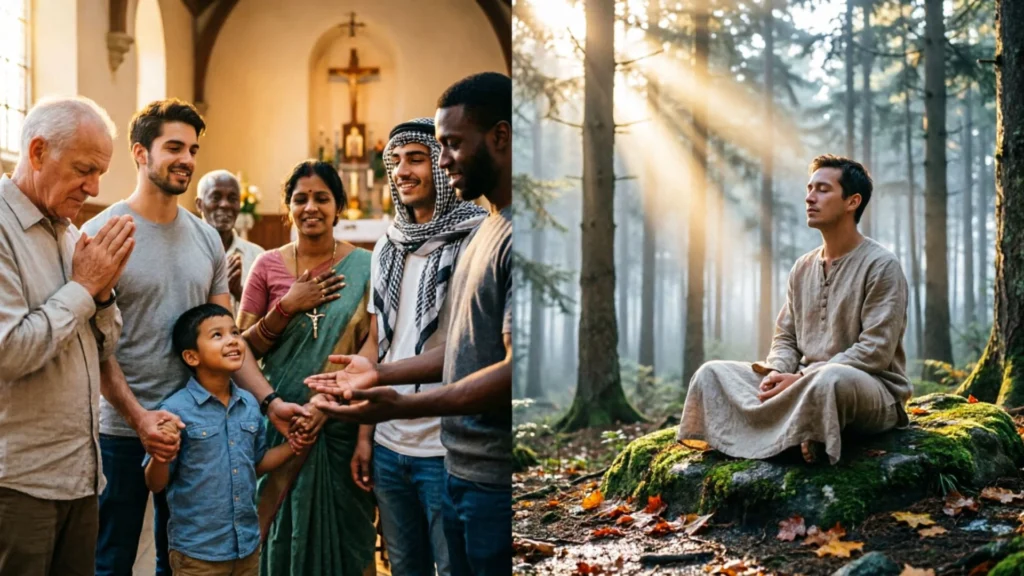
Religion operates within a defined structure. It has sacred texts, authoritative leaders, set rituals, and a community. These structures give followers a clear framework. You know what to believe, how to worship, and what is expected of you morally and socially.
Spirituality, on the other hand, thrives on personal freedom. There are no fixed rules. You decide what resonates with your soul. You might meditate one morning, journal the next, and walk in nature the following week. Your practice evolves as you evolve. This freedom is deeply attractive to modern seekers. It also carries risks. Without any structure, spiritual growth can become scattered, self-serving, or disconnected from accountability.
The structured nature of religion gives it durability. Religious traditions have survived for thousands of years precisely because their structures carry wisdom across generations. Spiritual paths, while liberating, can sometimes lack the depth that comes with centuries of tested practice.
2. Community vs. Solitary Practice
One of the most important differences in the religion vs spirituality conversation is the role of community. Religion is inherently communal. You pray together, celebrate holy days together, mourn together, and serve together. This community creates belonging, one of the deepest human needs. Studies from Harvard’s Human Flourishing Program show that people who regularly attend religious services report higher levels of life satisfaction, social trust, and mental health.
Spirituality is often a solitary pursuit. The spiritual seeker tends to go inward, exploring consciousness, energy, or the divine in private. This is not a weakness. Solitude is essential for deep self-awareness. But it can also lead to isolation. Without a community to challenge your blind spots and hold you accountable, spiritual growth can become a mirror that only reflects what you want to see.
This is why many people find the best of both worlds by practicing spirituality within a religious community, using ritual and fellowship as containers for personal inner work.
3. Doctrine vs. Direct Experience
Religion is doctrine-based. It teaches specific truths about God, creation, salvation, karma, or liberation. These teachings come from scripture, prophets, or enlightened teachers. Followers are expected to accept and internalize these doctrines. This gives religion authority and consistency. The same core beliefs have been transmitted faithfully across dozens of generations.
Spirituality is experience-based. The spiritual person does not primarily care what scripture says. They care what they personally feel, sense, and know in moments of stillness, awe, or clarity. Direct experience is the primary authority. A Buddhist might meditate and report an experience of pure awareness. A Christian mystic might feel the direct presence of Christ during silent prayer. A nature-based spiritual seeker might experience oneness with the forest.
Neither approach is superior. Doctrine without experience can become dry and lifeless. Experience without any doctrinal grounding can become chaotic and self-referential. The most fully alive spiritual lives tend to integrate both.
4. External Authority vs. Inner Knowing
Religious authority is external. It comes from the Pope, the Imam, the Rabbi, the Guru, or the sacred text. You trust the tradition and its representatives to guide your understanding. This is not blind obedience. At its best, it is a humble recognition that wisdom can be transmitted through time-tested traditions.
Spiritual authority is internal. The spiritually oriented person trusts their own intuition, inner voice, or higher self. They may consult teachers and texts, but the final judgment rests within. This inner authority empowers personal growth. It also requires significant self-awareness and discernment, because the inner voice can sometimes be the ego speaking rather than genuine wisdom.
Religious traditions often warn against this exact danger. The Christian concept of “discernment of spirits,” the Islamic warning against the nafs (lower self), and the Hindu concept of maya (illusion) all acknowledge that the human inner life can deceive us. External accountability, which religion provides, serves an important protective function.
5. Ritual and Worship vs. Contemplative Practice
Religion centers on ritual and worship. Prayer, fasting, pilgrimage, sacraments, offerings, and communal gatherings are the lifeblood of religious practice. These rituals are not arbitrary. They encode profound spiritual wisdom in physical action. The Catholic Mass re-enacts the Last Supper and connects the participant to 2,000 years of Christian history. The Jewish Shabbat creates sacred time each week. Muslim daily prayers orient the believer toward God five times a day.
Spirituality tends to favor contemplative practice. Meditation, mindfulness, breathwork, yoga, journaling, and time in nature are the spiritual seeker’s primary tools. These practices cultivate inner stillness and self-awareness rather than communal worship. Research from institutions like the University of Massachusetts Medical Center shows that mindfulness-based practices significantly reduce anxiety, depression, and chronic pain.
Both ritual and contemplation serve a common purpose. They interrupt ordinary consciousness and open a doorway to something deeper. The method differs. The intention is the same.
6. Fixed Identity vs. Fluid Seeking
Religious identity is often fixed and inherited. You are born into a Muslim family or a Hindu community. Your religious identity shapes your name, your diet, your holidays, your marriage prospects, and your worldview. This inherited identity is both a gift and a responsibility. It provides roots.
Spiritual identity is fluid and chosen. The spiritual seeker may draw from Buddhism today, Taoism tomorrow, and indigenous wisdom the week after. They are building a personal cosmology from the best of what resonates. This fluidity reflects modern individualism. It also reflects genuine curiosity. But critics, including many religious scholars, warn that spiritual consumerism can lead to shallow engagement with traditions that deserve deeper respect and commitment.
The tension here is real. Freedom to explore is valuable. Depth comes from commitment. The most transformative spiritual lives tend to eventually find a home, a tradition or practice deep enough to support genuine growth over decades.
7. Salvation vs. Self-Realization
Religion often centers on salvation, liberation, or divine favor. Christianity offers salvation through Christ. Islam offers paradise for those who submit to Allah’s will. Judaism emphasizes covenant faithfulness. Buddhism offers liberation from suffering through the Eightfold Path. Hinduism offers moksha, liberation from the cycle of rebirth. Each tradition has a specific destination and a specific path to reach it.
Spirituality tends to focus on self-realization. The goal is to wake up to your true nature, to realize your deepest self, which many spiritual traditions identify with the divine or with pure consciousness. This is not selfishness. It is the recognition that knowing yourself deeply is the gateway to genuine compassion, clarity, and love.
The difference in framing is significant. Religion places the goal outside the self, in God’s grace, divine judgment, or cosmic law. Spirituality places the goal within. Both perspectives carry profound truth, and the greatest spiritual and religious thinkers have always recognized this tension.
Religion vs Spirituality: Where They Overlap
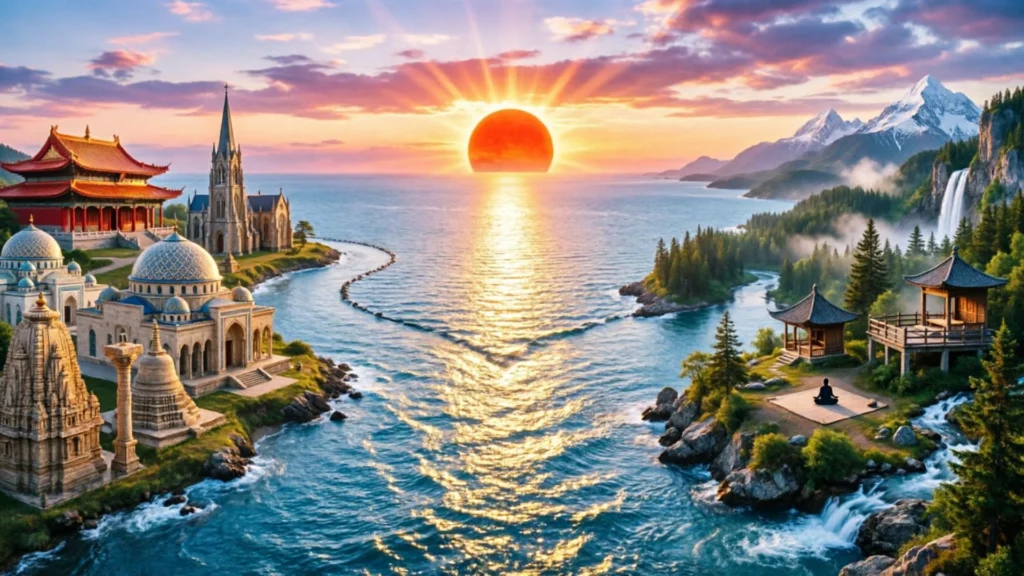
Despite their differences, religion and spirituality share a deep common ground. Both address the same existential questions. Both seek to connect the human with the divine. Both value love, compassion, service, and moral integrity.
The world’s great religions are also treasure houses of spiritual wisdom. The mystical dimensions of Christianity (contemplative prayer, Christian mysticism), Islam (Sufism), Judaism (Kabbalah), Hinduism (Advaita Vedanta, Tantra), and Buddhism (Zen, Tibetan practices) all emphasize direct inner experience alongside doctrinal belief.
Many people experience both simultaneously. A devout Catholic who practices centering prayer is religious and deeply spiritual. A Jewish practitioner of Kabbalah operates within religious law while pursuing mystical union. A Muslim who practices Sufi meditation is fully within their religious tradition while also engaged in profound spiritual exploration.
The idea that religion and spirituality are opposites is a modern oversimplification. They are more like two rivers flowing from the same mountain. Sometimes they merge. Sometimes they diverge. Both are seeking the same ocean.
The “Spiritual But Not Religious” Phenomenon
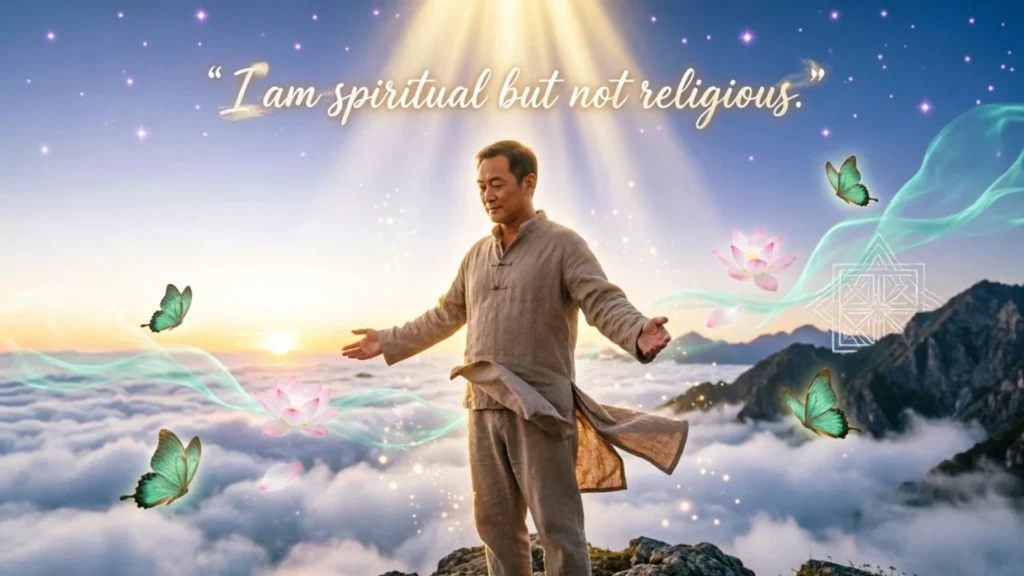
The phrase “spiritual but not religious” (often abbreviated SBNR) has become one of the defining cultural descriptors of the 21st century. In the United States, Pew Research data shows that roughly 27% of adults identify as religiously unaffiliated, and a significant portion of those still claim a spiritual life. In Europe, the numbers are even higher.
This movement is not simply a rejection of religion. It reflects genuine spiritual hunger alongside deep frustration with institutional failures. Sexual abuse scandals in the Catholic Church, religious extremism, the weaponization of faith for political power, and the experience of judgment within religious communities have driven millions away from organized religion.
At the same time, the hunger for transcendence has not disappeared. People are meditating in record numbers. Yoga studios have multiplied across every city. Books on mindfulness, consciousness, and inner transformation dominate bestseller lists. The desire to connect with something beyond the material is as powerful as ever. It has simply migrated from pews to meditation cushions.
Sociologist Robert Wuthnow described this as a shift from a “spirituality of dwelling” (belonging to a fixed religious home) to a “spirituality of seeking” (constantly exploring and questioning). Neither is inherently superior. Both reflect genuine responses to the human condition in different historical moments.
What Psychology and Neuroscience Say About Religion and Spirituality
Modern science has increasingly turned its attention to religious and spiritual experience. The results are fascinating and sometimes surprising.
Neuroscientist Andrew Newberg at Thomas Jefferson University has spent decades studying the brains of people during prayer and meditation. His research shows that deep religious and spiritual practice produces measurable changes in brain activity, reducing activity in the parietal lobe (the area responsible for the sense of self and separation) and increasing activity in areas associated with calm and positive emotion.
Psychologist Kenneth Pargament at Bowling Green State University found that religious coping strategies significantly help people manage stress, trauma, grief, and serious illness. People who draw on religion to make sense of suffering report higher levels of psychological resilience and post-traumatic growth.
Spiritual experiences, even outside religious contexts, show similar benefits. A 2021 study in the journal Frontiers in Psychology found that spiritual experiences during nature immersion were associated with reduced anxiety and greater sense of life purpose. Experiences of awe, transcendence, and interconnectedness, regardless of their religious framing, appear to be genuinely beneficial for human wellbeing.
This suggests that both religion and spirituality are tapping into something real in human psychology and neurobiology. The frameworks differ. The underlying experience may be drawing from the same source.
Religion and Spirituality Across Cultures
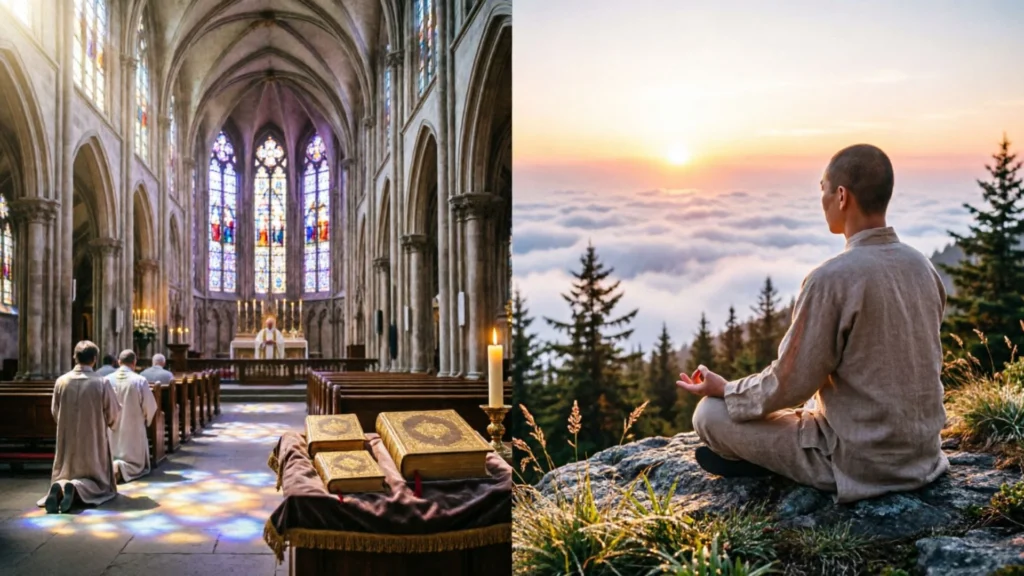
The relationship between religion and spirituality looks different depending on where you stand in the world.
In India, the distinction is far less pronounced than in the West. Hinduism, the world’s oldest living religion, has always encompassed enormous personal, mystical, and philosophical diversity within its broad tent. A Hindu may follow a strict ritual tradition at the temple while also practicing deeply personal yoga and meditation at home. Spirituality and religion breathe together in the Indian context.
In East Asia, Buddhism and Taoism have historically emphasized personal inner cultivation alongside communal practice. The Zen tradition in Japan, for example, centers on direct experiential awakening rather than doctrinal belief, making it simultaneously a religion and a spiritual practice in the deepest sense.
In Indigenous cultures worldwide, there is generally no separation between the sacred and the everyday. The spiritual dimension infuses all of life: hunting, planting, healing, storytelling, and community governance. Religion, in the Western institutional sense, simply does not apply. Spiritual relationship with the land, ancestors, and cosmic forces is woven into existence itself.
In the Western world, the separation between religion and spirituality is most pronounced and most culturally significant. It reflects the specific historical trajectory of Christianity’s relationship with power, science, and individualism. Understanding this cultural context matters deeply when you engage in the religion vs spirituality conversation.
Can You Be Both Religious and Spiritual?
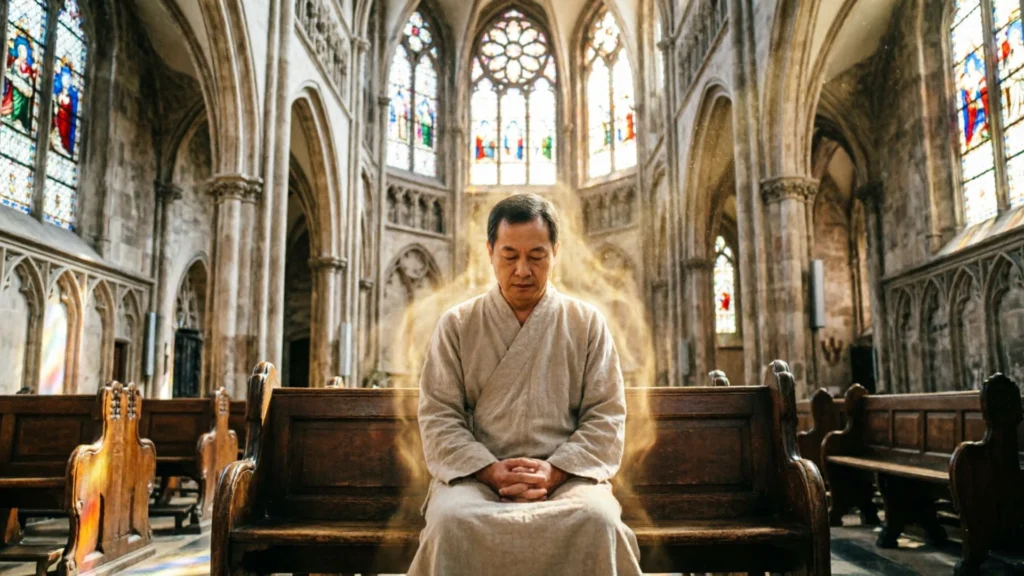
This is one of the most important questions in the entire religion vs spirituality debate, and the answer is an unequivocal yes.
In fact, many of the most admired figures in human history were precisely this. Thomas Merton, the Trappist monk, wrote some of the 20th century’s most penetrating explorations of inner consciousness while remaining fully committed to Catholic monasticism. Rumi, the 13th-century Sufi mystic, expressed a spirituality of breathtaking beauty and personal surrender while being a scholar of Islamic law. Ramana Maharshi operated within the Hindu tradition while teaching a path of pure self-inquiry that transcended any particular doctrine.
Being both religious and spiritual means bringing personal depth to communal practice. It means engaging the rituals of your tradition not as obligation but as doorways. It means allowing scripture to speak to your actual inner life rather than serving as ammunition for arguments. It means finding community in your faith while also doing the hard interior work that no institution can do for you.
The two do not compete. At their best, they amplify each other. Religion provides the container. Spirituality provides the living water inside it.
The Dangers of Religion Without Spirituality
Religion without spirituality can become hollow, rigid, and even harmful. When the forms of religion persist but the living spirit drains away, you are left with religiosity, the performance of faith without genuine interior transformation.
History offers sobering examples. The Inquisition, religiously-motivated warfare, colonial missions that destroyed indigenous cultures in the name of God, and the sexual abuse crises in multiple religious institutions all represent religion weaponized by ego and power. These tragedies happen when institutional structures lose their connection to the genuine spiritual values at their core.
On a personal level, religion without spirituality can produce people who know all the correct beliefs but show no genuine love, compassion, or humility. Jesus addressed this directly in Matthew 23, condemning the Pharisees not for their theology but for their hypocrisy and lack of mercy. The form was perfect. The spirit was absent.
This is why every major religious tradition has a strong prophetic or mystical stream that regularly calls the institution back to its living center. The Hebrew prophets challenged the Temple establishment. The Sufi masters challenged legalistic Islam. The Protestant Reformation challenged the Catholic Church. Internal spiritual reform is the immune system of religious health.
The Dangers of Spirituality Without Religion
Spirituality without any religious grounding carries its own risks, often less discussed but equally real.
The first risk is spiritual narcissism. When personal experience is the only authority, it is easy to build a spirituality that conveniently requires nothing uncomfortable. You focus on the practices that make you feel good and ignore the demands of genuine transformation. Real spiritual growth is hard. Genuine mystical traditions, even outside formal religion, have always emphasized this. The ego does not surrender easily or pleasantly.
The second risk is lack of accountability. Religious communities hold you accountable. Your priest, imam, or rabbi can challenge you. Fellow worshipers see how you actually live. Solitary spirituality can lack this corrective pressure. Without accountability, spiritual bypassing becomes common: using spiritual language to avoid dealing with real psychological wounds, relational failures, or moral shortcomings.
The third risk is cultural appropriation and shallowness. When spiritual seekers borrow practices from multiple traditions without depth or respect, they often miss the transformative depth those practices were designed to facilitate. Meditation, yoga, shamanic ceremony, and other practices are embedded in complex cultural and philosophical systems. Extracting them without context can reduce them to wellness products.
This is not an argument against spiritual seeking. It is an argument for humility, depth, and genuine commitment in whatever path you choose.
How to Integrate Religion and Spirituality in Modern Life
If you feel called to both, or if you are navigating the transition from one to the other, there are practical and meaningful ways to integrate religion and spirituality in your daily life.
Start with honesty. Ask yourself what you genuinely believe, not what you were told to believe or what is socially convenient. This kind of honest self-examination is the beginning of all genuine spiritual life. Many religious traditions celebrate this kind of questioning. Doubt is not the enemy of faith. Pretension is.
Engage your tradition with depth. If you belong to a religious tradition, go beyond surface attendance. Read the mystics of your tradition. Practice contemplative prayer or meditation within your tradition’s framework. Study the philosophy and history behind your rituals. Every major religion contains reservoirs of transformative spiritual wisdom that most casual adherents never access.
Build community with intention. Whether religious or spiritual, find others who are genuinely committed to inner growth. A small faith community, a meditation group, a study circle, or a regular gathering with spiritually serious friends can provide the accountability and mutual support that private practice alone cannot.
Practice consistency over novelty. The spiritual seeker’s temptation is always to move on to the next interesting thing. Real transformation comes from sustained practice. Choose a path, give it genuine time and attention, and trust the slow work of genuine inner change.
Religion vs Spirituality: Which Is Better?
This is the question many people really want answered. The honest response is that neither is categorically better. They serve different human needs and work best in different configurations for different people.
Religion is better for those who thrive with structure, community, inherited wisdom, and a clear moral framework. If belonging and shared practice give your life meaning, religion’s communal and doctrinal richness is deeply valuable.
Spirituality is better for those who have been harmed by religious institutions, who find personal direct experience more compelling than doctrine, or who are drawn to inner contemplation and individual exploration. If institutional authority feels like a cage rather than a container, spiritual practice outside formal religion is a legitimate and meaningful path.
Both together is often best for those who want depth without rigidity, community without conformity, and personal experience grounded in time-tested wisdom. The greatest spiritual teachers across all traditions have generally exemplified this integration.
The question is not which is objectively superior. The question is which combination of structure, community, practice, and personal depth will best serve your genuine growth as a human being.
Religion vs Spirituality in Times of Crisis
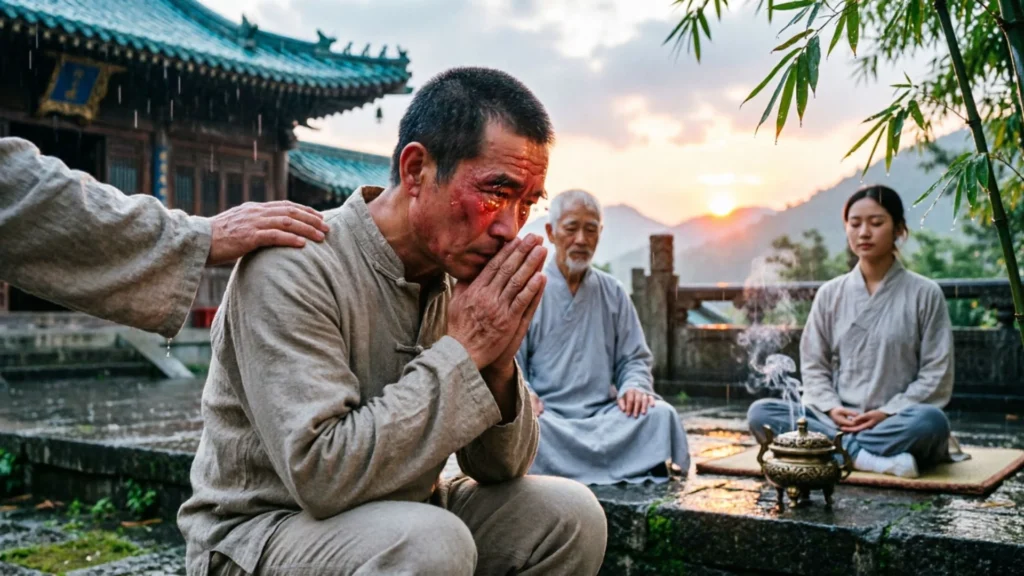
Crisis reveals what you actually believe. When you lose someone you love, when your health collapses, when your carefully constructed life falls apart, both religion and spirituality are tested in the most direct way possible.
Religion offers community, ritual, and narrative in moments of loss. Funeral rites, prayers of lament, the community that shows up with food and presence, and the theological frameworks for understanding suffering and death: these gifts of religion are profoundly stabilizing in crisis. The Book of Job, the Psalms of lamentation, the Islamic prayers for the dying, and the Buddhist teachings on impermanence all speak directly to the human heart in its darkest moments.
Spirituality offers inner resources when external structures fail or feel inadequate. The practice of meditation can create a still point in the storm. The experience of connectedness can remind you that you are not alone in the cosmos. Inner knowing can find a thread of meaning even when institutional answers feel hollow.
Many people experience a deepening of both religion and spirituality during crisis. The superficial falls away. What remains is what is truly essential.
A Final Note
The conversation about religion vs spirituality is not about choosing a winner. It is about understanding yourself more honestly and more deeply. Both paths are real responses to the same ancient human hunger for meaning, connection, and transcendence.
If you are religious, let your tradition come alive from the inside. Allow its rituals to become personal doorways. Let its community challenge and strengthen you. Seek the mystical core within your own faith.
If you are spiritual but not religious, do the hard work. Commit to depth over novelty. Find accountability in community. Respect the traditions you draw from. Let your inner experience translate into genuine love and service in the world.
If you are somewhere in between, trust the journey. The most honest spiritual lives are rarely tidy. They involve doubt, searching, commitment, crisis, and renewal. That is not a sign of failure. That is the actual path.
Both religion and spirituality, at their best, point toward the same truth: that something larger than your individual self is available to you, that genuine transformation is possible, and that the life of meaning, love, and depth is the one most worth living.

Simu Wong Lee holds a Bachelor of Arts (BA) in Arts, Culture, and Mythology from the College of Humanities and Social Sciences at George Mason University. He is a passionate content writer specializing in arts, cultures, mythologies, religions, and spirituality. His work has been published on several websites, including Prayerverses and Spiritualmarker, where he shares well-researched, engaging, and insightful content that helps readers explore the deeper meanings behind beliefs, symbols, and traditions from around the world.